

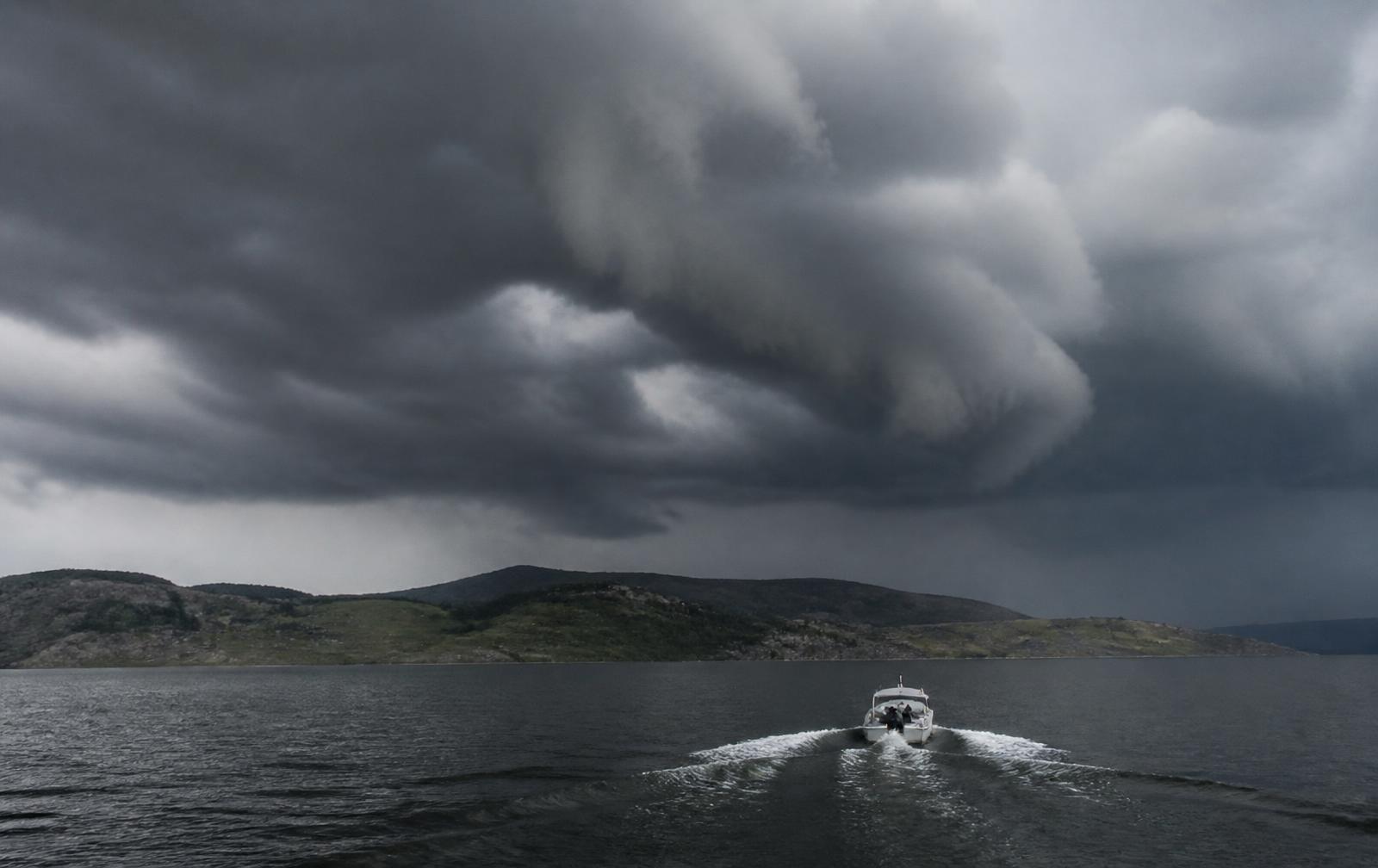
Most bad days on the water were forecast. Not perfectly, but well enough that the decision to launch was already the wrong one.
You do not need to be a meteorologist. You need four numbers and one habit.
The four numbers
Wind against current, or wind blowing the length of a long lake, stacks up steeper water than the wind speed alone suggests. A protected morning bay can become unrunnable by two in the afternoon with no change in the forecast.
- Wind speed and direction — and gusts, which are what actually flips a small boat and soaks a family.
- Wave or chop height, read against your boat's freeboard rather than in the abstract.
- Chance and timing of thunderstorms; afternoon build-ups are the classic inland trap.
- Visibility and fog, especially near coasts and in early morning.
Signs worth trusting on the water
- Towering, hard-edged clouds with dark flat bases building upward.
- A sudden drop in temperature or a wind shift that arrives with a gust.
- Whitecaps forming where there were none.
- Distant thunder — if you can hear it, the storm is close enough to reach you.
Turning back is a plan, not a failure
Decide your turn-back trigger before you leave: a wind speed, a cloud line, a time of day. A pre-made decision survives the temptation to push on for one more hour.
Running home in building weather: everyone in life jackets, gear stowed low and secured, hatches and ports closed, bilge pump on, and heading for the nearest safe shelter rather than the harbor you launched from.
Take the waves at an angle rather than head-on or beam-on, and slow down — pounding breaks boats and people. If lightning is close, get off the water and away from the tallest thing around, which on open water is your own boat.
General boating safety education, not legal advice. Rules differ by state — confirm the requirement where you boat with your state boating agency.